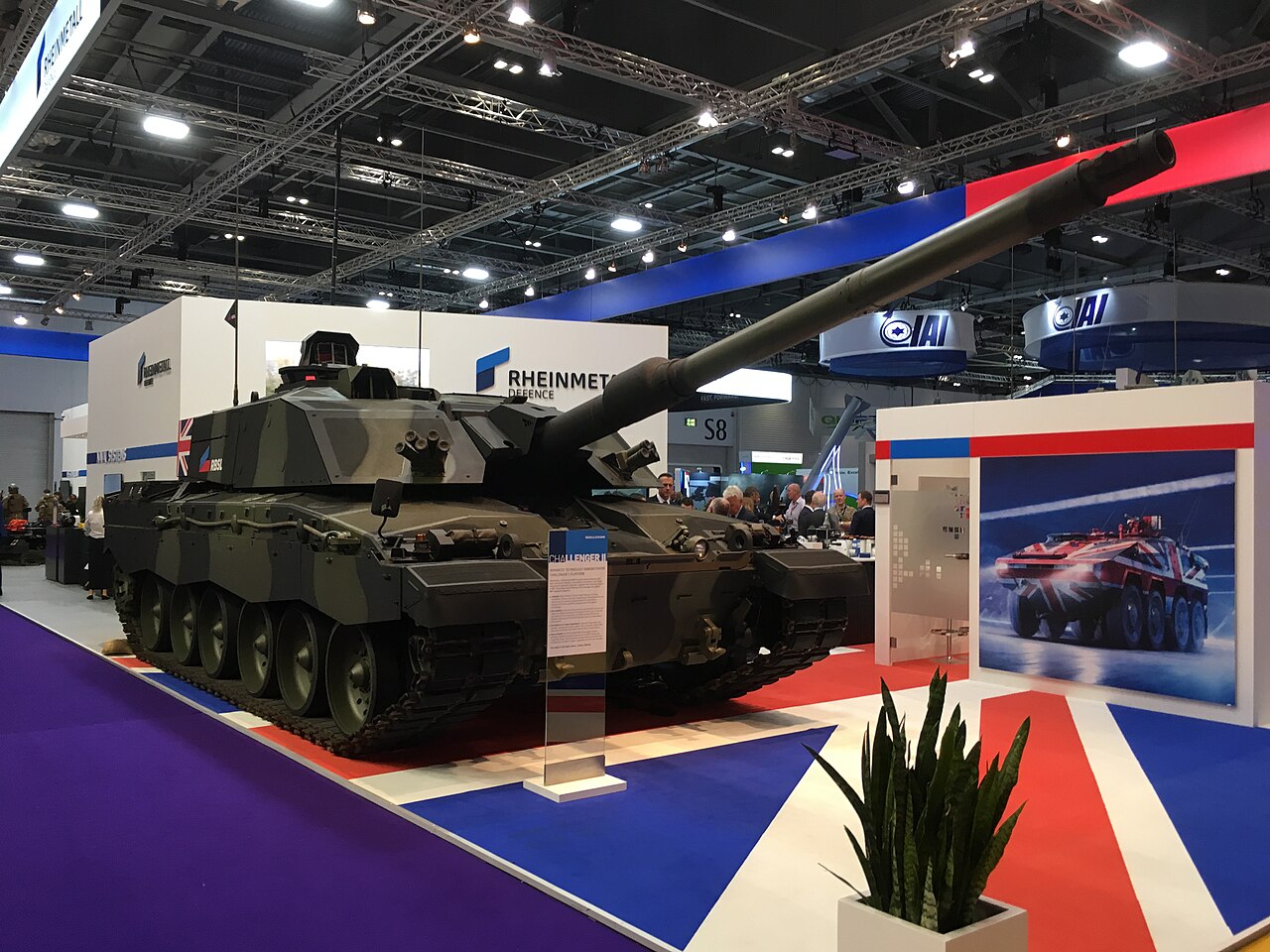
Challenger 2

Calreyn88 · CC BY-SA 4.0
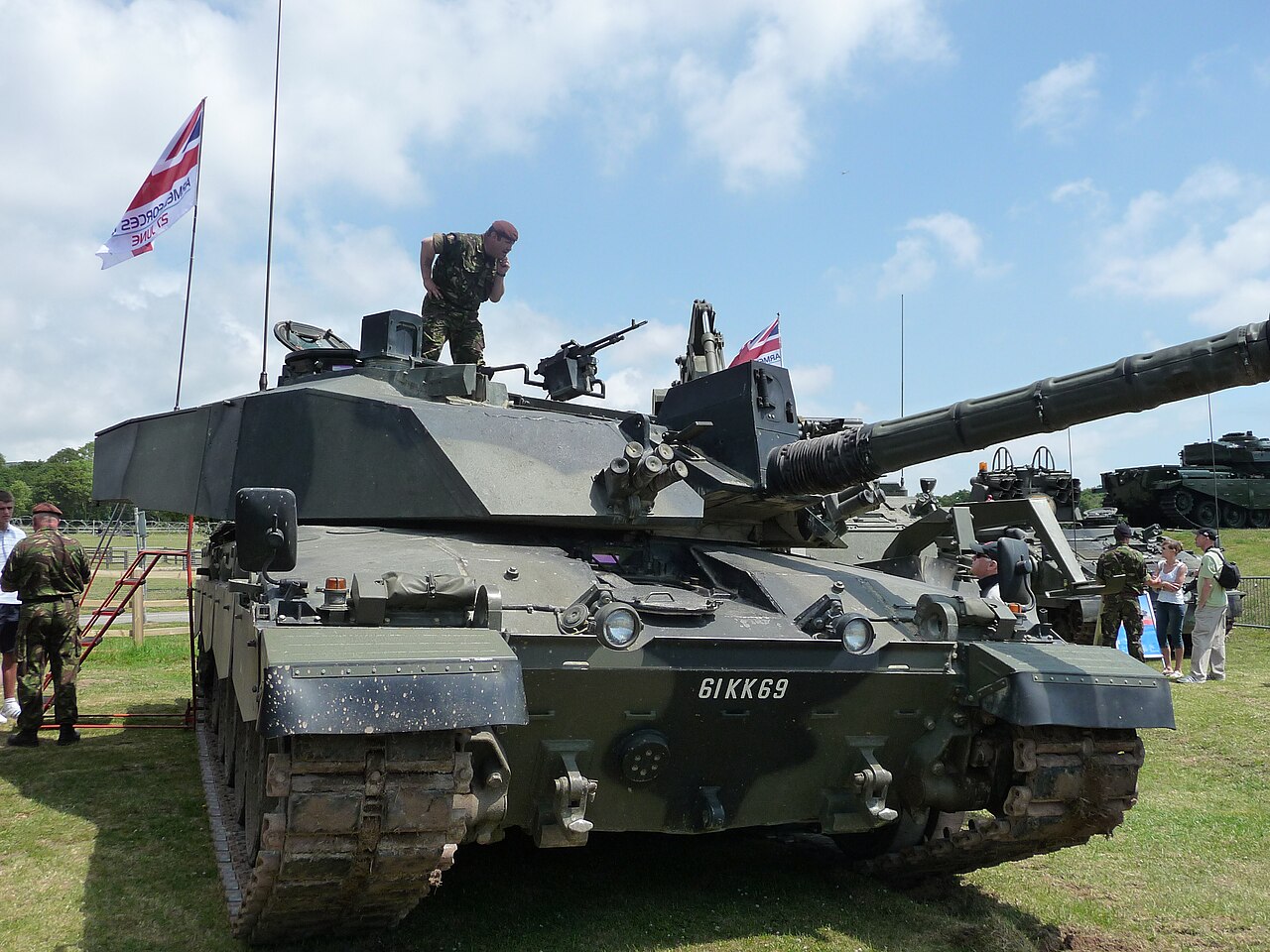
The FV4034 Challenger 2 (MoD designation 'CR2') is a third generation British main battle tank (MBT) in service with the armies of the United Kingdom, Oman, and Ukraine.
- Type
- Main battle tank
- Crew
- 4 (commander, gunner, loader, driver)
- Engine
- Perkins CV12-6A V12 diesel
- Maximum speed
- 59 km/h (37 mph)
Reader's Guide
It has been used in Bosnia and Herzegovina, Kosovo, and Iraq. Further Russian claims with drone footage show FPV drone strikes on at least two other vehicles, though the extent of damage is unknown.
Did You Know?
- The Challenger 2 is the third vehicle of this name, following the A30 Challenger of World War II and the Challenger 1 of the Persian Gulf War era.
- The tank's turret and hull are protected with second generation Chobham armour, also known as Dorchester.
- The Challenger 2 carries 50 rounds for its main armament and 4,200 rounds of 7.62 mm ammunition for its secondary weapons.
- The first Challenger 2 destroyed in operations was by accidental friendly fire from another Challenger 2 in Basra in 2003.
From Disappointment to Designation
The Challenger 2 did not emerge from a clean slate. The Chieftain it was meant to succeed had respectable firepower and armour but suffered from a weak engine and poor suspension. Army staff consistently favoured the Leopard 2 for its mobility and NATO-common smoothbore gun, with the Abrams as a distant second.
Firepower and Fortification
The Challenger 2 carries a four-person crew—commander, gunner, loader, and driver—arranged around a central fighting compartment. The tank stows fifty main-gun rounds, supplemented by 4,200 rounds of 7.62 mm ammunition feeding two secondary weapons: a coaxial L94A1 EX-34 chain gun and an L37A2 general-purpose machine gun. Protection is provided by second-generation Chobham armour, internally designated Dorchester, wrapping both turret and hull.
Into the Field
Its combat record remains modest in terms of losses: at least three Challenger 2s are confirmed destroyed. The first fell to an accident in Basra in 2003, when another Challenger 2 accidentally fired upon it. Russian drone footage has also shown FPV drone strikes on at least two additional vehicles, though the extent of damage to those remains unconfirmed.
The Road Ahead
The tank's lineage stretches back further still: the name Challenger was first applied to the A30, a World War II vehicle built on a Cromwell chassis armed with a 17-pounder gun, then to the Challenger 1 of the Persian Gulf War era. The MoD designation for the Challenger 2 is simply CR2, a quiet bureaucratic label for a vehicle that has served three nations—United Kingdom, Oman, and Ukraine—and whose combat record, while short, spans friendly-fire accidents, drone warfare, and the high-stakes operations of a 21st-century European war. As Challenger 3 takes over the front line, the Challenger 2's role shifts from active frontline asset to a bridge between the Chieftain era and whatever comes next.
Common Misconceptions (Editorial)
Some people mistakenly believe the Challenger 2 is the first British tank to bear that name. In fact, the Challenger 2 is the third vehicle of this name, following the A30 Challenger of World War II and the Challenger 1 of the Persian Gulf War era. Another misconception is that the Challenger 2's armour is the same as that used on earlier British tanks; however, the tank's turret and hull are protected with second generation Chobham armour, known as Dorchester.
Why It Matters (Editorial)
The Challenger 2 endures as a symbol of British engineering and military capability, continuously upgraded to remain relevant against evolving threats. Its service across the UK, Oman, and Ukraine demonstrates its adaptability and the importance of durable, well-protected main battle tanks in modern combined-arms warfare.
Gallery
Frequently Asked Questions
Why is the Challenger 2 important in tank history?
It stands as the backbone of British armoured warfare since the late 1990s and has seen export to both Oman and Ukraine. Its development path—from private venture to frontline MBT—illustrates how the UK maintained a competitive heavy-armour capability through the post-Cold War era.
More in Tanks 1-21
Spotted an error? Know more?
This is a living reference — every entry is fact-audited, and reader corrections feed straight into our audit queue. Suggest an edit · See this site's audit record