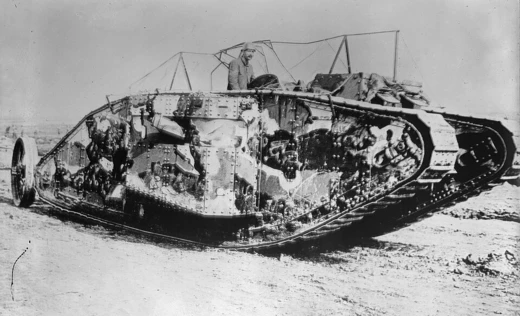
Panzer IV
German medium tank, intended to fight other armoured fighting vehicles.

via Wikipedia: Panzer III · see source
The Panzerkampfwagen III (Pz.Kpfw. III), commonly known as the Panzer III, was a medium tank developed in the 1930s by Germany, and was used extensively in World War II. The official German ordnance designation was Sd.Kfz. 141. It was intended to fight other armoured fighting vehicles and serve alongside and support the similar Panzer IV, which was originally designed for infantry support.
- field
- Armoured fighting vehicle
- nationality
- German
- known_for
- Most produced German AFV design in World War II; chassis used for multiple varia
- produced
- 1937–1943
- number_built
- About 18,000 vehicles based on the Panzer III chassis were produced between all
Verified Timeline
Lore & Background
The Panzer III was developed following specifications laid down by Heinz Guderian on January 11, 1934, for a medium tank with a maximum weight of 24,000 kg and a top speed of 35 km/h. It was intended as the main tank of the German Panzer divisions, capable of engaging and destroying opposing tank forces, and was to be paired with the Panzer IV, which was to deal with anti-tank guns and infantry strong points. Daimler-Benz, Krupp, MAN, and Rheinmetall all produced prototypes, with Daimler-Benz's design chosen for production. The first model, the Ausf. A, came off the assembly line in May 1937; ten, two of which were unarmed, were produced that year. Mass production of the Ausf. F version began in 1939. A distinct feature of the Panzer III, influenced by the British Vickers Medium Mark I tank (1924), was the three-man turret, meaning the commander was not distracted with another role and could fully concentrate on maintaining awareness of the situation and directing the tank. Most tanks of the time did not have this capability, providing the Panzer III with a combat advantage versus such tanks. For example, the French Somua S-35's turret was manned only by the commander, and the Soviet T-34 originally had a two-man turret crew. Unlike the Panzer IV, the Panzer III had no turret basket, merely a foot rest platform for the gunner.
Reader's Guide
The Panzer III was used in the German campaigns in Poland, in France, in the Soviet Union, and in North Africa. Many were still in combat service against Western Allied forces in 1944-1945: at Anzio in Italy, in Normandy, in Operation Market Garden in the Netherlands and in East Prussia against the Red Army. A sizeable number of Panzer IIIs also remained as armoured reserves in German-occupied Norway and some saw action, alongside Panzer IVs, in the Lapland War against Finland in the fall of 1944. In both the Polish and French campaigns, the Panzer III formed a small part of the German armoured forces. Only a few hundred Panzer III Ausf. As to Fs were available in these two campaigns, with most being armed with the 37 mm main gun. They were the best medium tank available to the German military at the period of time. On the Eastern front, the Panzer III proved to be inferior in both armour and firepower to the Soviet KV-1 heavy tanks and T-34 medium tanks. In response, the Panzer III was up-gunned to the 5 cm KwK 39, a longer, more powerful 50-millimetre gun, and received more armour but still was at disadvantage compared with the Soviet tank designs. As a result, production of self-propelled anti-tank guns (Panzerjäger), as well as the up-gunning of the Panzer IV was initiated. In 1942, the final version of the Panzer III, the Ausf. N, was created with a 75-millimetre KwK 37 L/24 cannon, the same short-barreled low-velocity gun used for the initial models of the Panzer IV and designed for anti-infantry and close-support work. For defensive purposes, the Ausf. N was equipped with rounds of HEAT ammunition that could penetrate 70 to 100 millimetres of armour depending on the round's variant, but these were strictly used for self-defence. Production of the Panzer III ceased in 1943, but the StuG III assault gun, which was based on the Panzer III chassis, remained in production until the end of the war. About 18,000 vehicles based on the Panzer III chassis were produced between all variants --- by far the most of any German AFV design in World War II, and accounting for over a quarter of all tanks and assault guns produced by Nazi Germany.
Did You Know?
- The Panzer III was one of the early tanks to use a torsion-bar suspension, first seen on the Stridsvagn L-60 a few years earlier.
- The Panzer III and Panzer IV effectively swapped roles: the Panzer III ended up mounting the short-barrelled 7.5 cm KwK 37 L/24 originally used on the first Panzer IVs.
- The Panzer III's three-man turret, influenced by the British Vickers Medium Mark I (1924), meant the commander was not distracted with gunning or loading.
- The final Panzer III variant, the Ausf. N, used HEAT ammunition for self-defence that could penetrate 70 to 100 millimetres of armour.
- About 18,000 vehicles based on the Panzer III chassis were produced, accounting for over a quarter of all tanks and assault guns produced by Nazi Germany.
Design Philosophy & Chassis Development
German tank doctrine of the mid-1930s required medium armour to fulfil two separate combat tasks: engaging enemy tanks with armour-piercing rounds, and supporting infantry against soft targets like machine-gun nests. On 11 January 1934, following specifications laid down by Heinz Guderian, the Army Weapons Department formalized a medium tank capped at 24,000 kilograms and 35 kilometres per hour. Conceived as the principal battle tank of Panzer divisions, it was meant to hunt opposing armoured forces, while the Panzer IV would handle the infantry-support mission. Four firms—Daimler-Benz, Krupp, MAN, and Rheinmetall—built competing prototypes tested through 1936 and 1937. Daimler-Benz's design won the production contract; the first Ausf. A left the line in May 1937, with ten units (two unarmed) built that year before mass production of the Ausf. F began in 1939. A persistent engineering challenge was suspension. Early models from Ausf. A through D tried leaf-spring arrangements with eight small road wheels, before the torsion-bar system using six larger wheels was standardized on the Ausf. E, making the Panzer III, alongside the Soviet KV, among the earliest tanks to adopt a concept first seen on the Swedish Stridsvagn L-60.
The Three-Man Turret Advantage
A distinctive feature of the Panzer III, influenced by the British Vickers Medium Mark I of 1924, was its three-man turret. This design choice meant the tank commander was freed from secondary duties such as gunning or loading, allowing him to concentrate entirely on observing the battlefield and directing the vehicle's actions. In an era when most tanks lacked this capability, the arrangement conferred a meaningful combat advantage. The French Somua S-35, for instance, had a turret manned solely by the commander, while the Soviet T-34 originally fielded a two-man turret crew. Inside the Panzer III's turret there was no basket; the gunner stood on a simple foot-rest platform rather than the more enclosed arrangement found in the Panzer IV. The initial armament was a 3.7 cm gun—the same weapon infantry used in an anti-tank role—but later models received the 5 cm KwK 38, the largest cannon that could physically fit within the turret ring's dimensions. This constraint would ultimately prove critical when the tank met heavier Soviet opponents on the Eastern Front.
The Eastern Front Crisis & Role Reversal
On the Eastern Front, the Panzer III found itself outmatched in both armour thickness and firepower by the Soviet KV-1 heavy tank and T-34 medium tank. Engineers responded by up-gunning the vehicle to the 5 cm KwK 39, a longer and more powerful 50-millimetre cannon, and adding extra armour, yet the tank still lagged behind its Soviet counterparts. The strategic consequence was profound: the Panzer IV, benefiting from a larger turret ring, was redesigned to carry the long-barrelled 7.5 cm KwK 40 and assumed the role of Germany's principal tank. The Panzer III, by contrast, was progressively demoted. Its final variant, the Ausf. N of 1942, mounted the short-barrelled 7.5 cm KwK 37 L/24—the very same low-velocity gun that had armed the earliest Panzer IVs—designated for anti-infantry and close-support work. For self-defence, the Ausf. N could fire HEAT rounds capable of penetrating 70 to 100 millimetres of armour, but these were strictly a defensive measure. In effect, the two tank families had swapped their original combat roles.
Production Scale & Enduring Chassis Legacy
Although dedicated Panzer III production ceased in 1943, the chassis outlived the tank itself. The Sturmgeschütz III, a turret-less assault gun mounting a short-barrelled cannon on the Panzer III hull, continued in production until the very end of the war, fulfilling the direct infantry-support role that had been part of the original German tank doctrine. In total, roughly 18,000 vehicles based on the Panzer III chassis were built across all variants. This figure made it by far the most-produced armoured fighting vehicle design in the German arsenal during World War II, accounting for over a quarter of every tank and assault gun that Nazi Germany manufactured. The chassis's versatility—adaptable to both a conventional turret and a fixed superstructure—gave it a longevity no other German design matched. From the first Ausf. A in 1937 through the final StuG III at war's end, the platform served for nearly a decade, a testament to the soundness of Daimler-Benz's original engineering choices.
Common Misconceptions (Editorial)
- Some sources incorrectly state that the Panzer III was originally designed as a direct counterpart to the Panzer IV in the same role. In fact, the Panzer III was intended to fight enemy tanks, while the Panzer IV was designed for infantry support. - It is often assumed that the Panzer III and Panzer IV kept the same roles throughout the war. In reality, they effectively swapped roles, with the Panzer III later mounting the short-barrelled 7.5 cm gun originally used on early Panzer IVs.
Why It Matters (Editorial)
The Panzer III endures in military history as a testament to how thoughtful design choices—such as the three-man turret that freed the commander to direct the fight—can give a tank a decisive edge in combat. Its production and evolution over six years also illustrate how even a carefully planned tank could be forced to adapt and finally swap roles with its stablemate as battlefield conditions shifted.
Gallery
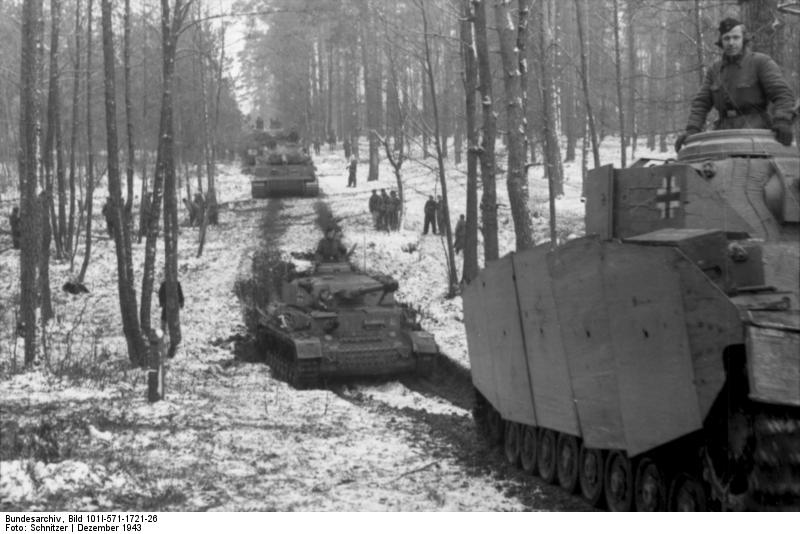
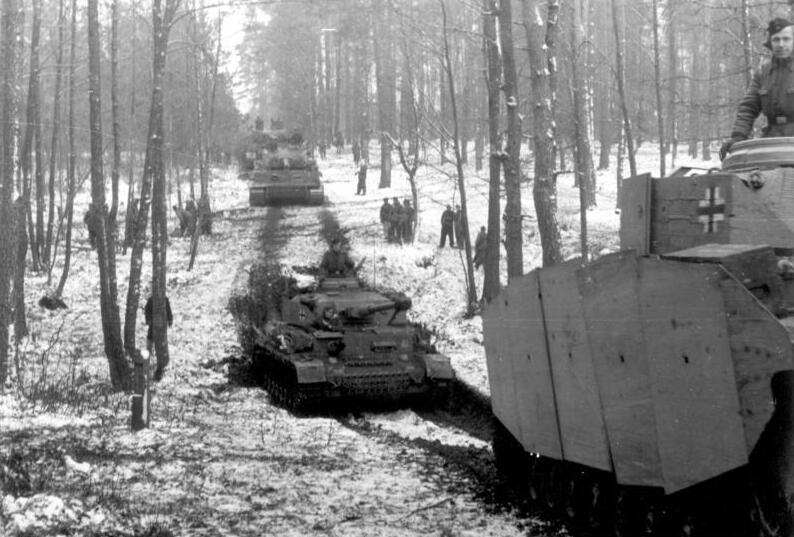
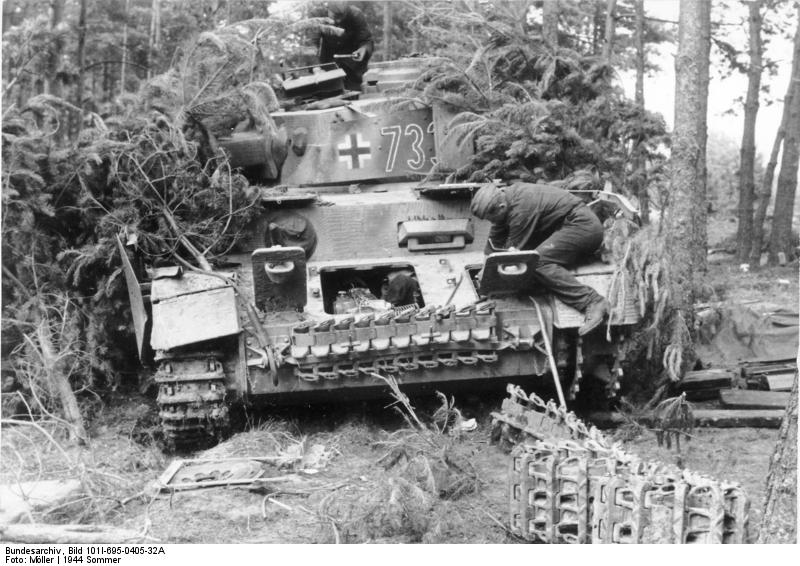
Frequently Asked Questions
What is the Panzer IV?
The Panzer IV was a German medium tank that formed the core of Wehrmacht armoured divisions throughout World War II. It carried the military designation Sd.Kfz. 161 and entered development in the late 1930s.
How many Panzer IVs were built?
A total of 8,553 vehicles across all variants were produced between 1936 and 1945. That made it the most numerous German tank of the war, with only the StuG III assault gun exceeding it among fully tracked fighting vehicles.
What role did the Panzer IV fill on the battlefield?
It served as the primary medium tank for panzer and panzergrenadier units, delivering direct fire support and engaging enemy armoured targets. Its chassis was also adapted into a wide range of self-propelled and specialized variants over the course of the conflict.
Why is the Panzer IV considered so important?
Its uninterrupted production run from 1936 to 1945 gave German commanders a dependable, continuously available platform across every major theatre. No other single German tank design shaped armoured doctrine as consistently as the Panzer IV did.
How long was the Panzer IV in service?
It remained in active production and front-line use for the full duration of the Second World War, from 1936 through 1945. That nearly decade-long service span made it one of the longest-running tank programs of the era.
More in Tanks 1-21
Spotted an error? Know more?
This is a living reference — every entry is fact-audited, and reader corrections feed straight into our audit queue. Suggest an edit · See this site's audit record