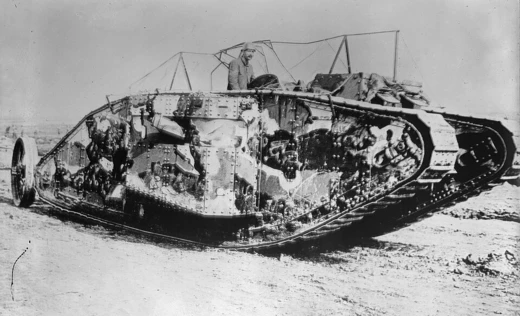
M1 Abrams
Third-generation American main battle tank, named for General Creighton Abrams.

US Army · Public domain
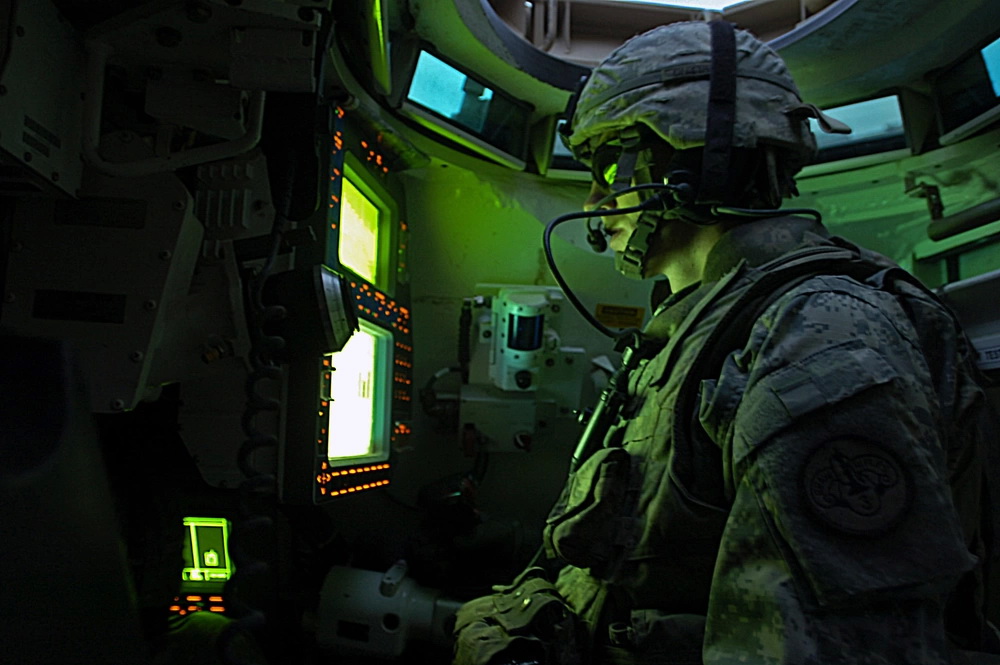
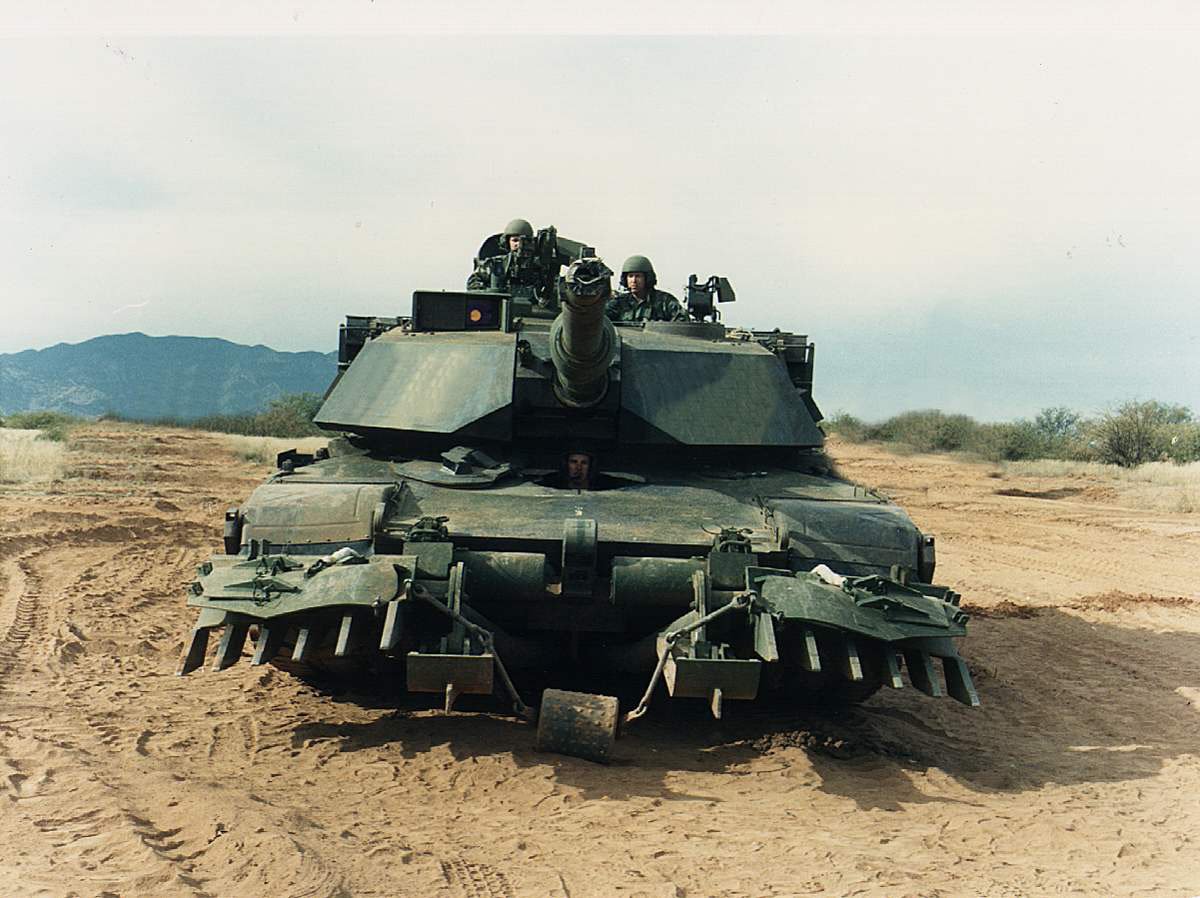
The M1 Abrams is a third-generation American main battle tank designed by Chrysler Defense (now General Dynamics Land Systems) and named for General Creighton Abrams. Conceived for modern armored ground warfare, it is one of the heaviest tanks in service, with later variants like the M1A2 SEPv3 reaching up to 73.6 short tons (66.8 metric tons). It introduced several modern technologies to the United States armored forces, including a multifuel turbine engine, sophisticated Chobham composite armor, a computer fire control system, separate ammunition storage in a blowout compartment, and NBC protection for crew safety.
- Weight
- Varies by variant; the M1A2 SEPv2 is typically around 71.2 short tons (64.6 metric tons), while the M1A2 SEPv3 reaches up to 73.6 short tons (66.8 metric tons).
Lore & Background
The turbine engine was part of Chrysler's original design, not a new requirement imposed later. It was first used in combat by the U.S. in the Gulf War, and later in the War in Afghanistan, the Iraq War, and by other nations in various conflicts.
Reader's Guide
The M1 Abrams represents a significant leap in tank technology, introducing a gas turbine engine, Chobham composite armor, and a computerized fire control system. Its development was shaped by the failure of the MBT-70 project and the need to avoid cost overruns. The tank's heavy armor and firepower have made it a mainstay of U.S. armored forces, with upgrades continuing after the cancellation of its planned replacement, the XM1202 Mounted Combat System. The Abrams has seen extensive combat service, from the Gulf War to the Russo-Ukrainian War, and is operated by multiple nations. Its design influenced later U.S. armored vehicle programs, and its longevity underscores its adaptability through successive upgrades in optics, armor, and firepower.
Did You Know?
- The M1 Abrams is named for General Creighton Abrams.
- It introduced a multifuel turbine engine and Chobham composite armor to U.S. armored forces.
- The M1 Abrams was not developed from the failed joint American-West German MBT-70 project; the XM1 program was a new start that drew on lessons from MBT-70 and other projects.
From a Failed Alliance to a New Beginning
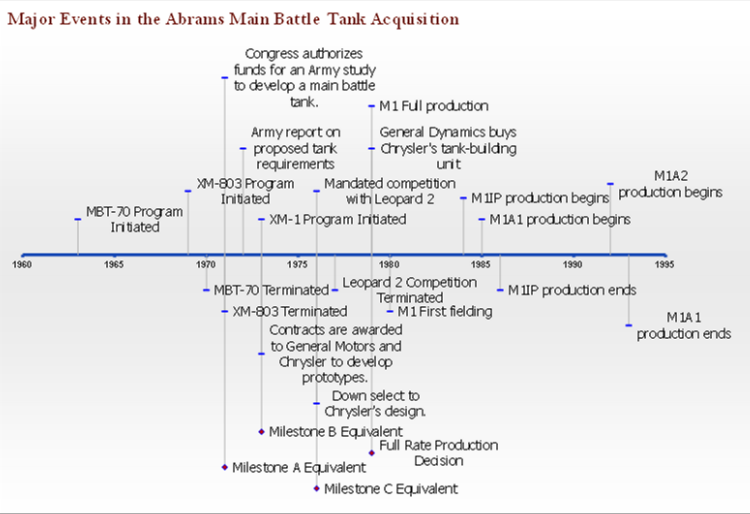
The M1 Abrams did not emerge from a clean slate. Army and West Germany's Bundeswehr launched a joint main battle tank program called the MBT-70, aiming to replace the aging M60 and improve NATO interoperability. The design was ambitious—featuring a mechanical autoloader, a driver relocated into the NBC-protected turret, a 152 mm gun-launcher capable of firing the Shillelagh missile, and a hydropneumatic suspension that let the driver raise or lower the entire vehicle. Yet the collaboration between General Motors and a German consortium was plagued by cultural friction and design disagreements. The U.S. briefly pursued a simplified derivative called the XM803, but Congress killed it in December 1971, redirecting remaining funds toward an entirely new tank.
A Tank Built Around Armor and Turbines
When the Army restarted its main battle tank effort under Major General William Desobry, a single insight reshaped the entire design. To exploit it fully, the new tank needed armor roughly two feet thick, compared to the M60's four inches. General Creighton Abrams, for whom the tank would be named, set the target weight at 53 tonnes, abandoning the earlier goal of staying under 45 tonnes. The Pentagon also overhauled its procurement approach: instead of the government doing most of the design work, contractors would now competitively bid complete designs. The tank also introduced a computerized fire control system, separate ammunition storage in a blowout compartment, and NBC protection for the crew—technologies that collectively redefined what a Western main battle tank could do.
From Desert Storm to the Front Lines of Today
The M1 Abrams entered U.S. Since then, the tank has been deployed across a wide arc of conflicts: the U.S. sent Abrams into both the War in Afghanistan and the Iraq War, while Iraqi forces employed the vehicle in their campaign against the Islamic State. Saudi Arabia fielded the tank during the Yemeni Civil War, and more recently, Ukraine has operated Abrams during the Russo-Ukrainian War. The vehicle's reach extends well beyond the United States; export variants serve in the armed forces of Egypt, Kuwait, Saudi Arabia, Australia, Poland, and Iraq. The U.S. Across these theaters, the tank has proven adaptable to very different operational environments, from the open deserts of the Middle East to the urban and rural landscapes of Eastern Europe.
Three Generations and an Uncertain Future
The Abrams family has evolved through three principal operational variants—the M1, M1A1, and M1A2—each iteration bringing upgrades in armament, protection, and electronics. Looking ahead, the Army had planned to replace the Abrams with the XM1202 Mounted Combat System. However, after that project was canceled, the service decided to keep the M1 series in operation for the foreseeable future, committing to incremental upgrades in optics, armor, and firepower rather than a wholesale replacement. This decision underscores the Abrams' enduring role as the backbone of American armored ground warfare.
Common Misconceptions (Editorial)
Some people mistakenly believe the M1 Abrams’s turbine engine was imposed as a new requirement after the program began, but the facts confirm it was part of Chrysler’s original design. Another common error is that the Abrams was derived from the failed MBT-70 project, when in fact the XM1 program was a new start that only drew lessons from that earlier effort.
Why It Matters (Editorial)
The M1 Abrams endures as a symbol of American armor innovation, combining raw power with crew protection in a package that has adapted to decades of evolving threats. Its prolonged service—from the Gulf War to current conflicts—underscores how a well-conceived design can remain relevant through continuous upgrades, making it a linchpin of modern combined-arms warfare.
Gallery
Frequently Asked Questions
Who is M1 Abrams?
The M1 Abrams is a third-generation main battle tank built for the U.S. Army, developed by what is now General Dynamics Land Systems. It carries the name of General Creighton Abrams, a senior U.S. Army commander.
What makes the M1 Abrams stand out?
It was the first U.S. tank to combine a gas turbine powerplant, Chobham-style composite armor, and a fully computerized fire control system in one package. It also added a dedicated, blowout-rated ammunition bay and built-in NBC protection for the crew.
Who is the M1 Abrams named after?
The tank honors General Creighton Abrams, a U.S. Army officer best known for commanding forces during the Vietnam War. The naming follows the long U.S. military tradition of dedicating major platforms to distinguished service members.
How heavy is an M1 Abrams?
It depends on the variant: the M1A2 SEPv2 comes in at roughly 71.2 short tons, while the latest SEPv3 climbs to about 73.6 short tons. Either way, it places the Abrams among the heaviest main battle tanks still in active service.
Why is the M1 Abrams considered a landmark in tank design?
It introduced a suite of technologies—turbine propulsion, advanced composite armor, and digital fire control—that set the benchmark for modern Western armored warfare. Its design choices, particularly the separated ammunition storage concept, have influenced tank development well beyond the U.S. military.
More in Tanks 1-21
Spotted an error? Know more?
This is a living reference — every entry is fact-audited, and reader corrections feed straight into our audit queue. Suggest an edit · See this site's audit record