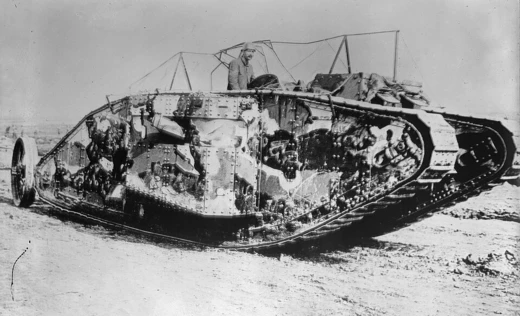
IS-2

Joshbaumgartner · CC BY-SA 4.0
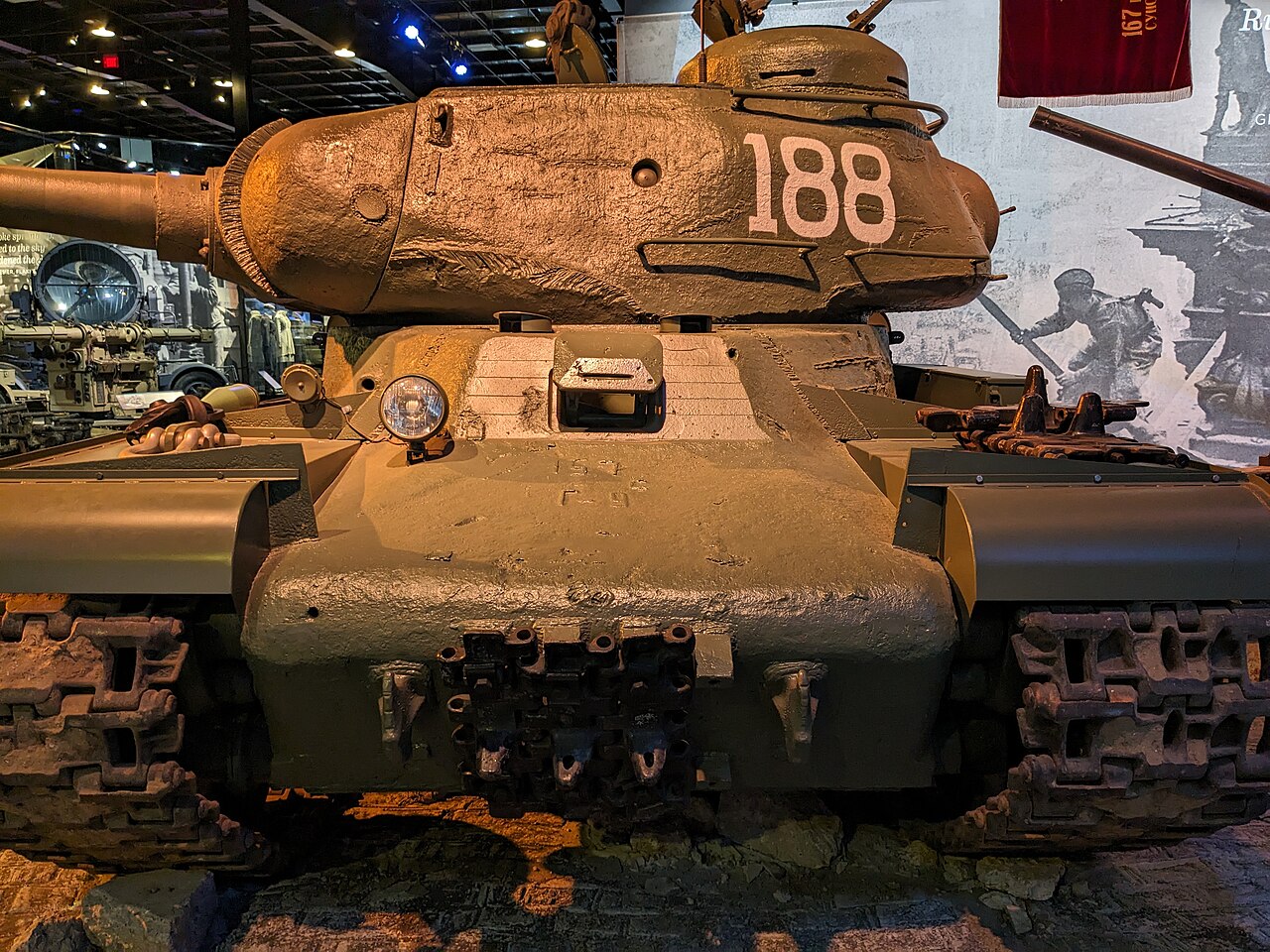
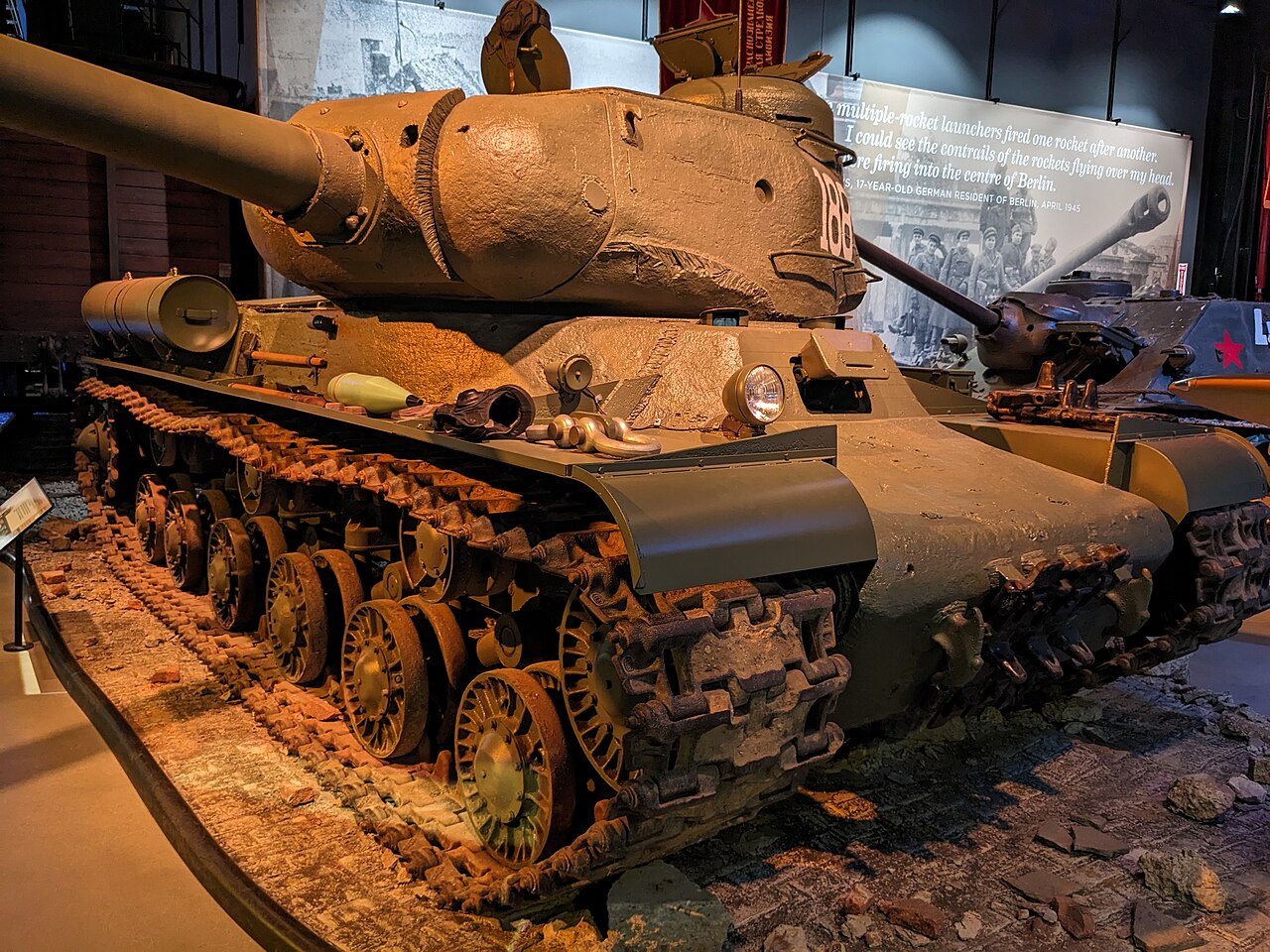
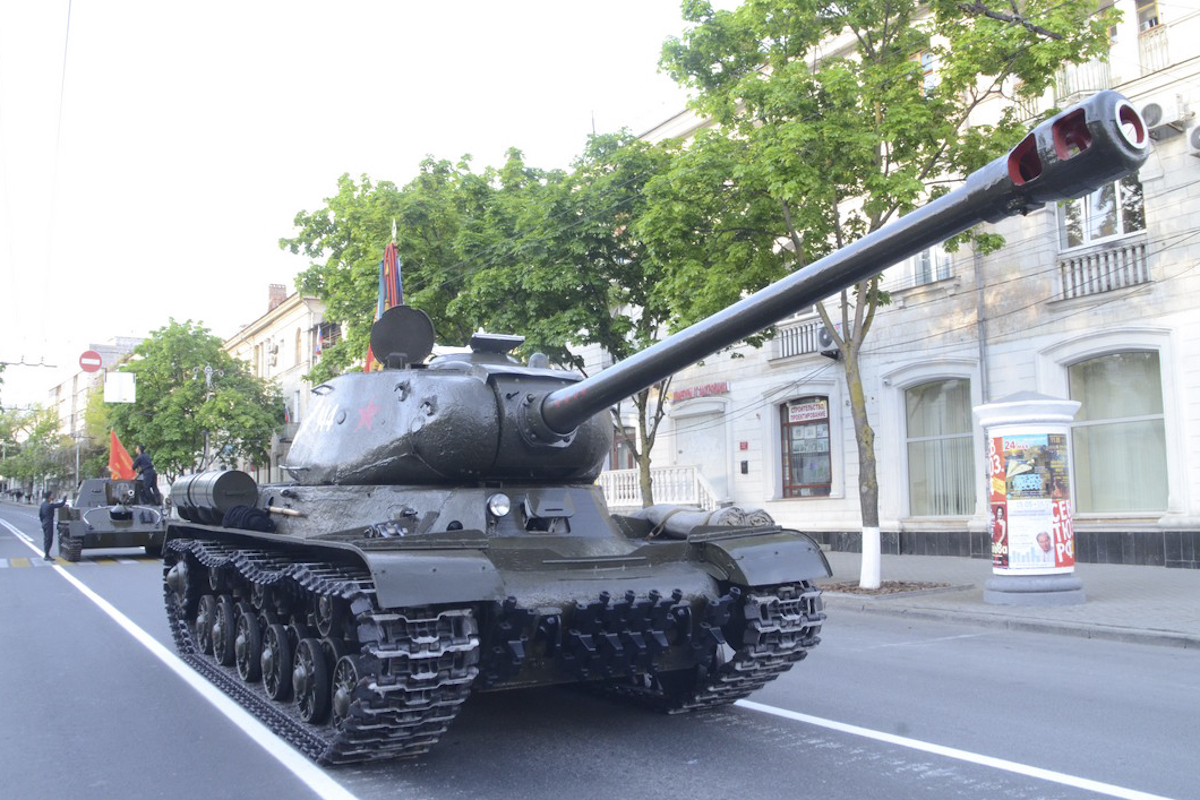
The IS-2 (Russian: ИС-2, sometimes romanized as JS-2) is a Soviet heavy tank, the second of the IS tank series named after Soviet leader Joseph Stalin. It was developed and saw combat during World War II and saw service in other Soviet allied countries after the war.
- field
- Armored fighting vehicle
- nationality
- Soviet
- production_start
- December 1943
- crew
- Not specified in article
Lore & Background
The IS-2 was developed after efforts to up-gun the earlier IS-85 began in late 1943. The D-25 was selected as the main armament, using separate shell and powder charge, which resulted in a lower rate of fire compared to single-piece ammunition. First deliveries of IS-122s mounted with this gun were in December 1943. Some IS-1s built were rearmed before leaving the factory and issued as IS-2s. The tank was slightly lighter and faster than the heaviest KV model 1942 tank, with thicker front armor and a much-improved turret design.
Reader's Guide
The IS-2's significance lies in its role as a Soviet heavy tank during World War II, providing a heavily armed and armored vehicle that could engage German heavy tanks. The tank's armor was primarily cast, reducing production costs but sometimes resulting in brittle armor due to lower-quality alloys. The IS-2 saw service in other Soviet allied countries after the war, extending its legacy beyond World War II. Its development reflected the Soviet response to German heavy tanks like the Tiger and Panther, and it remained in service for years after the conflict.
Did You Know?
- The D-25 gun delivered 5.37 times the muzzle energy of the older F-34 76.2 mm tank gun.
- The IS-2 carried only 28 rounds of ammunition, typically 20 high explosive and 8 armor-piercing.
From KV-1 to IS-2: A Lineage of Compromise
The IS-2 did not emerge fully formed; it was the endpoint of a long, troubled chain of Soviet heavy-tank development. The original KV-1 drew complaints from its own crews over sluggish mobility and a main gun that lagged behind the T-34's, and Moscow's decision to divert KV-1 assembly lines to T-34 output nearly ended the heavy-tank program altogether. The lighter, faster KV-1S offered a partial fix but sacrificed the thick armor that had defined the series, and it was phased out by April 1943.
Choosing the 122: Firepower and Its Trade-offs
By late 1943 the IS-85's 85 mm gun had lost its edge, especially after the same caliber was fitted to the T-34. The D-25 won partly on industrial pragmatism—the Soviet base had surplus A-19 production capacity while the D-10 was in short supply. The cost was a separate shell-and-charge loading cycle that depressed rate of fire, a real disadvantage in tank-versus-tank duels. The first IS-122s carrying this gun reached units in December 1943.
Steel Against Steel: The IS-2 in Tank Duels
Steven Zaloga observed that below 1,000 m the IS-2 and Tiger I could each destroy the other, with crew skill and tactical situation ultimately deciding the outcome.
Production Rhythm and Postwar Service
The IS-2's production history mirrors the urgency of Soviet wartime industry. As the second tank in the series bearing Joseph Stalin's name, the IS-2 carried both a political and a technical legacy. Beyond the Soviet Union, the tank continued to serve in allied countries well after the war.
Common Misconceptions (Editorial)
A common misconception is that the IS-2 used single-piece ammunition like many contemporary tanks, but its D-25 gun used separate shell and powder charges, which resulted in a lower rate of fire. Another misconception is that the IS-2 was the first in its series, but it was actually the second IS tank, following the IS-1 (IS-85); some IS-1s were even rearmed as IS-2s before leaving the factory.
Why It Matters (Editorial)
The IS-2 endures as a symbol of Soviet industrial and military resilience during World War II, representing the shift toward heavier firepower and armor that defined late-war armored engagements. Its development and deployment highlight the urgent wartime need to counter German heavy tanks, and its continued service in allied countries after the war underscores its lasting impact on Cold War-era armored doctrine.
Gallery
Frequently Asked Questions
What is the IS-2?
The IS-2 is a Soviet heavy tank that was the second vehicle in the IS series. It was built during World War II and is widely recognized for its large-caliber main gun and heavy armor.
What does the 'IS' in IS-2 stand for?
The designation honors Joseph Stalin, the Soviet leader who gave his name to the entire family of IS-series heavy tanks.
When did IS-2 production begin?
Factory output started in December 1943, just in time for the tank to see frontline action in the war's final years. After 1945, surplus units were transferred to several Soviet-allied nations for continued service.
More in Tanks 1-21
Spotted an error? Know more?
This is a living reference — every entry is fact-audited, and reader corrections feed straight into our audit queue. Suggest an edit · See this site's audit record